

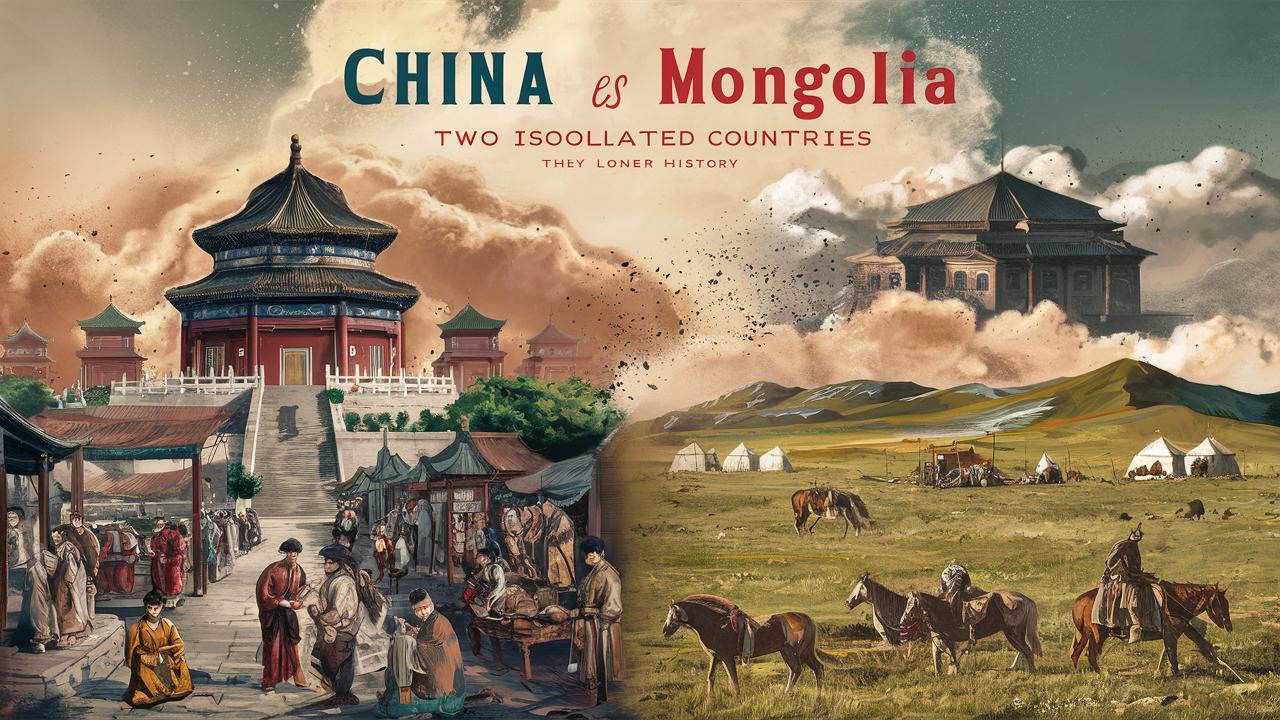
When it comes to history, people often wonder which country, China or Mongolia, holds the title for having a longer or richer past. Both nations boast deep cultural roots and significant historical impact, but comparing their histories isn’t as straightforward as it might seem. So, let’s unpack this fascinating question: who really has the longer history China or Mongolia?
Understanding History: What Counts as “History”?
Before we dive in, it’s important to clarify what we mean by “history.” Are we talking about the length of human presence, the development of civilizations, or recorded history with written documents? History can be divided into prehistoric times when humans lived without writing and recorded history, which begins when societies start documenting their stories.
China is famous for its early development of writing systems, which provide a continuous historical record. Mongolia, on the other hand, was home to nomadic cultures that mainly preserved their histories orally and through archaeological artifacts.
Early Civilizations in China
China’s history begins deep in the Neolithic era, dating back over 10,000 years with early farming communities like the Yangshao culture. Moving into recorded history, China boasts some of the world’s earliest dynasties:
-
The Xia Dynasty (c. 2070–1600 BCE): Often regarded as the first Chinese dynasty, though its historical status is debated.
-
The Shang Dynasty (c. 1600–1046 BCE): The first dynasty with clear archaeological evidence and early writing.
-
The Zhou Dynasty (c. 1046–256 BCE): Introduced the concept of the “Mandate of Heaven” and laid foundations for Chinese philosophy and culture.
China’s invention of writing, particularly oracle bone script, marks one of the earliest continuous historical records in the world.
Early History of Mongolia
Mongolia’s human presence goes back tens of thousands of years, but recorded history emerges later compared to China. Early Mongolian history is characterized by nomadic tribes who left limited written records but rich oral traditions.
-
Prehistoric Nomadic Tribes: Ancient nomads roamed the Central Asian steppes, hunting and herding.
-
The Xiongnu Confederation (3rd century BCE – 1st century CE): A powerful nomadic empire often considered a precursor to later Mongol groups.
-
Early Mongolic Tribes: Before Genghis Khan, several tribes inhabited the region, but historical documentation was sparse.
The Formation of the Mongol Empire
One of Mongolia’s most famous historical periods began with Genghis Khan in the early 13th century. He united the Mongol tribes and built the largest contiguous empire in history, reshaping much of Asia and Europe.
This era marked Mongolia’s significant impact on world history, though it is relatively recent compared to China’s long dynastic history.
China’s Dynastic Continuity
China’s dynastic cycle spans over 4,000 years with few interruptions. From ancient dynasties to imperial rule, China maintained a sophisticated bureaucratic system and culture. Dynasties like the Han, Tang, Song, Ming, and Qing contributed profoundly to art, philosophy, technology, and governance.
This continuous state formation and cultural development make China one of the world’s oldest continuous civilizations.
Comparing Historical Records
China’s history is rich with written records, ancient texts, and archaeological sites, providing a clear timeline. Mongolia’s history relies more on archaeological findings and oral traditions, with its recorded history becoming prominent mainly from the Mongol Empire era onward.
Archaeological Discoveries in Both Regions
Both countries have fascinating archaeological sites:
-
China: Sites like Banpo Village and the Terracotta Army showcase ancient civilization.
-
Mongolia: Discoveries such as the Deer Stone monuments and ancient kurgans offer insights into nomadic cultures.
Cultural and Historical Impact on Modern Times
China’s vast empire and cultural achievements continue to influence global culture, politics, and economics. Mongolia’s legacy as the homeland of the Mongol Empire gives it a unique place in history, influencing Eurasian culture and history.
Debating Length vs. Continuity
If the question is “who has the oldest history,” China, with over 4,000 years of documented dynastic history, takes the lead. But if we consider human presence and nomadic culture history, Mongolia’s story goes back just as far, though less documented.
China wins in terms of continuous statehood and recorded history, while Mongolia’s nomadic heritage provides a rich but different kind of historical narrative.
Conclusion
So, who has the longer history, China or Mongolia? The answer depends on how you define history. China boasts one of the world’s longest continuous written histories with a succession of dynasties spanning thousands of years. Mongolia, while equally ancient in terms of human presence and culture, has a history shaped more by nomadic lifestyles and oral traditions, with recorded prominence emerging later.
Both countries offer invaluable perspectives on human civilization different in style but equally rich in legacy.
FAQs
Q1: How far back does China’s history go?
China’s history dates back over 4,000 years with written records starting from the Shang dynasty around 1600 BCE.
Q2: What is Mongolia’s oldest known civilization?
Mongolia’s earliest known organized group is the Xiongnu confederation from around the 3rd century BCE.
Q3: Did the Mongol Empire influence China?
Yes, the Mongol Empire, under Kublai Khan, founded the Yuan dynasty and ruled China from 1271 to 1368.
Q4: Why is China considered one of the oldest continuous civilizations?
Because of its long, uninterrupted dynastic history and early development of writing and bureaucracy.
Q5: How do historians measure the length of a culture’s history?
They consider archaeological evidence, written records, cultural continuity, and state formation over time.